Do I Need Certification to Practice Sound Healing?
Perhaps you've bought a singing bowl.
You've practiced using it.
Maybe you've even created a beautiful little sound experience for a friend.
Then the bigger question arrives:
“Can I actually offer sound healing to other people, or do I need to be certified first?”
It's an important question, especially if you're thinking about charging for sessions, running sound baths or adding sound healing to an existing wellness practice.
The answer depends partly on where you live and what you're offering.
But there's another question we think matters just as much:
Even if nobody legally requires you to complete training, would you feel confident working with a paying client without it?
That's where certification becomes about much more than a piece of paper.
Quick Answer: Do I Need Certification to Practice Sound Healing?
Sound healing isn't regulated everywhere in the same way as professions such as medicine, psychology or physiotherapy, so there isn't one worldwide licence that every sound healer must hold.
The exact rules depend on where you live, how you describe your services and what you're actually offering.
However, if you're planning to work professionally with clients, we strongly recommend completing proper sound healing certification training first.
Why?
Because knowing how to make a singing bowl ring isn't the same as knowing how to facilitate a professional session.
Good training should teach you the instruments and the practitioner skills around them.
Is Sound Healing a Regulated Profession?
There isn't one worldwide rule for sound healing practitioners.
That's important.
Your requirements can depend on your country, state or territory and how your business operates.
You may need to consider things such as:
- Business registration requirements
- Professional and public liability insurance
- Consumer protection laws
- Advertising requirements
- Local venue requirements
- Professional boundaries
- The claims you make about your services
This is where beginners can misunderstand the question.
“I'm allowed to do it” and “I'm properly prepared to do it” aren't necessarily the same thing.
Imagine someone buys a set of beautiful crystal singing bowls on Monday and decides to charge people for a sound bath on Saturday.
They might know how to play the bowls.
But what happens when someone asks about a health condition?
What happens if a participant is uncomfortable?
How loud should the instruments be?
How do you gain consent?
How do you structure the session?
How do you describe what sound healing can and can't do?
These are practitioner questions.
And they're exactly why training matters.
Why Is Sound Healing Certification Worth It?
Let's clear something up.
The certificate isn't the most valuable part of certification.
The valuable part is who you become while earning it.
You Learn How to Work With Sound Responsibly
A quality sound healing course should teach you more than how to strike a bowl.
You need to learn how to work with instruments, structure sessions, communicate with clients and understand the boundaries of your role.
One of the biggest mistakes a new practitioner can make is becoming so excited about the instruments that they forget about the person receiving the experience.
The bowl isn't your client.
The person is.
That's why we believe practitioner training needs to include the human side of the work too.
You Build Confidence Through Practice
Picture this.
You've watched 50 videos about sound healing.
You know what a gong is.
You know how a singing bowl works.
You've read about tuning forks.
Then ten people lie down in front of you and look up expectantly.
Now what?
Knowledge and facilitation are different skills.
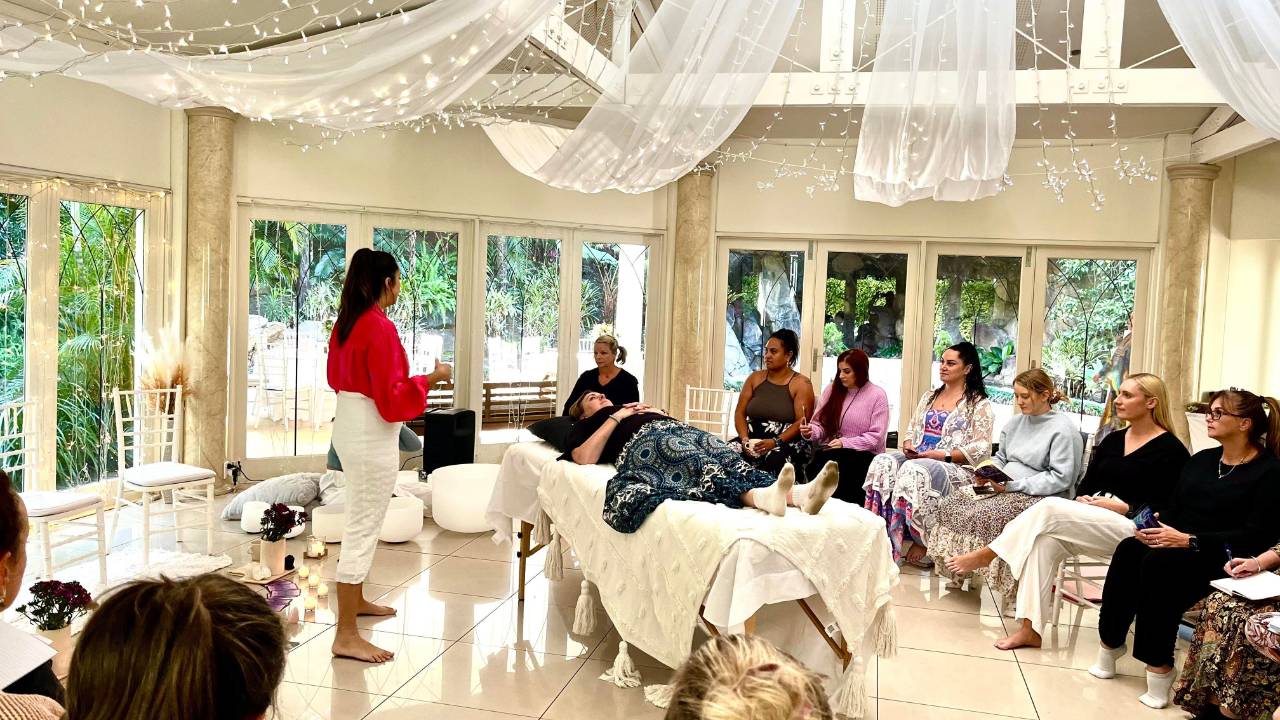
Training gives you a structure to practice things such as choosing instruments, moving through a session, communicating clearly and responding when things don't go exactly as planned.
Nobody starts completely confident.
Confidence comes from knowing what to do, then practising doing it.
You Build Professional Credibility
If you're asking people to trust you with their time, money and wellbeing experience, they're allowed to ask:
“What training have you completed?”
Certification gives you a way to answer that question.
It can demonstrate that you haven't simply bought a singing bowl and decided to call yourself a practitioner.
You've invested time into learning your craft.
That matters.
What Do You Learn in Sound Healing Training?
This is where you should look beyond the words “Sound Healing Certificate” on a course page.
Ask what you're actually going to know how to do when you've finished.
Sound healing training may include:
- Foundations of sound healing
- Crystal and Tibetan singing bowls
- Weighted and unweighted tuning forks
- Gongs and chimes
- Practical instrument techniques
- Sound healing session structure
- Meditation and relaxation techniques
- Client communication
- Consent and professional boundaries
- Practitioner responsibilities
- Professional practice foundations
At Holistic Wellness Academy, our Sound Heals Certification Training is designed to help you build practical practitioner skills, not simply collect information.
Because there's a big difference between:
"I've read about sound healing."
and
“I know how to facilitate a sound healing experience.”
Can You Practice Sound Healing Without Certification?
For your own personal practice, you generally don't need practitioner certification to sit at home and explore gentle sound practices.
You can learn about your singing bowl.
Practice mindful listening.
Explore your voice.
Become familiar with sound.
But once you move from:
“I'm doing this for myself”
to
“I'm offering this professionally to someone else”
the responsibility changes.
If you're planning to charge for private sessions, facilitate group sound baths, run workshops or add sound healing to your professional wellness practice, proper training is a very sensible step.
Your clients deserve more than good intentions.
They deserve someone who has taken their role seriously.
How Do You Choose the Right Sound Healing Certification?
Don't choose a course simply because you can finish it quickly and receive a pretty certificate.
Ask better questions.
Will I actually learn how to use the instruments?
Will I learn how to create a complete session?
Will I understand what to do with a real client?
Does the training cover professional practice?
Will I have resources I can return to afterwards?
Is there support while I'm learning?
A certificate should represent learning.
It shouldn't simply be something you downloaded.
This is why we've built our Sound Heals Certification Training around helping students develop the knowledge and practical skills needed to move forward with greater confidence.
What Are the Benefits of Becoming a Certified Sound Healing Practitioner?
Certification doesn't magically make somebody an expert.
And it doesn't guarantee that you'll instantly build a thriving practice.
What it can give you is a foundation.
You can finish your training with:
- More confidence using sound healing instruments
- A clearer session structure
- Greater awareness of professional boundaries
- Practical facilitation skills
- Training you can communicate to prospective clients
- A pathway for continuing to develop your skills
Think of certification like learning to drive.
Getting your licence doesn't mean you've experienced every road, every traffic condition or every situation you'll ever encounter.
It means you've built a foundation that allows you to begin.
Experience keeps building from there.
Frequently Asked Questions
Do I need certification to practice sound healing?
For personal practice, generally not.
For professional practice, legal requirements vary depending on your location and services.
However, if you plan to work professionally with clients, we strongly recommend proper sound healing practitioner training.
Is sound healing legally regulated?
Sound healing isn't regulated in exactly the same way everywhere.
Requirements can vary depending on your country, state or territory, business structure and the services you're providing.
Before offering professional services, check the rules that apply where you live, including business, insurance and consumer requirements.
Can I learn sound healing online?
Yes.
Good online training can allow you to learn techniques, watch demonstrations, practice with your instruments and work through practitioner education at your own pace.
For many students balancing work, children or other responsibilities, that flexibility can make training much more achievable.
Can I practice on friends and family before certification?
Practising skills with willing friends or family can be part of the learning process.
Be clear that you're learning, gain appropriate consent and stay within the techniques you've been taught.
If you're planning to move into professional or paid sessions, completing proper training first gives you a much stronger foundation.
Does sound healing certification guarantee career success?
No.
And we'd be wary of anybody promising that it does.
Certification gives you knowledge, tools and a starting foundation.
What happens afterwards also depends on your practice, confidence, communication, experience and the work you put into developing what you offer.
The certificate opens the door. You still have to walk through it.
Is sound healing certification worth the investment?
If you're serious about offering sound healing professionally, quality training can be a valuable investment in your skills and confidence.
But look at what you're actually learning.
The goal isn't to become someone who can say:
"I'm certified."
The goal is to become someone who can say:
“I know what I'm doing and why I'm doing it.”
Certification Is About More Than a Certificate
This is the piece we really want future sound healers to understand.
Your clients probably won't remember every instrument you played.
They may not know whether your singing bowl cost $100 or $1,000.
But they'll remember how they felt in your space.
Did you explain what was happening?
Did they feel comfortable asking questions?
Did you respect their boundaries?
Did you seem calm and confident?
Did they feel cared for?
That's practitioner work.
And learning to become that practitioner is far more valuable than simply putting another certificate on the wall.
Final Thoughts
So, do you need certification to practice sound healing?
For your own personal exploration, generally not.
For professional work, the exact legal requirements depend on where you live and what you're offering.
But if you want people to trust you to facilitate their experience, proper practitioner training is a smart foundation.
You don't need to know everything before you begin training.
That's the whole point.
You learn.
You practice.
You build confidence.
And eventually, the question can change from:
"Could I really do this?"
to:
“When can I start?”
Ready to Become a Certified Sound Healing Practitioner?
If sound healing has moved beyond simple curiosity and you're thinking:
“I want to learn how to do this properly,”
our Sound Heals Certification Training at Holistic Wellness Academy is your next step.
We teach you the sound healing tools, techniques and practitioner foundations so you can move beyond experimenting with instruments and begin building real confidence in what you're doing.
You don't need musical experience.
You don't need to own every instrument.
And you don't need to already feel like a practitioner.
That's what you're coming to us to learn.
Start with the training.
Build your skills.
Then see where sound healing can take you.
